Department
Home » Electronics & communication engineering » Admissions
ABOUT THE DEPARTMENT
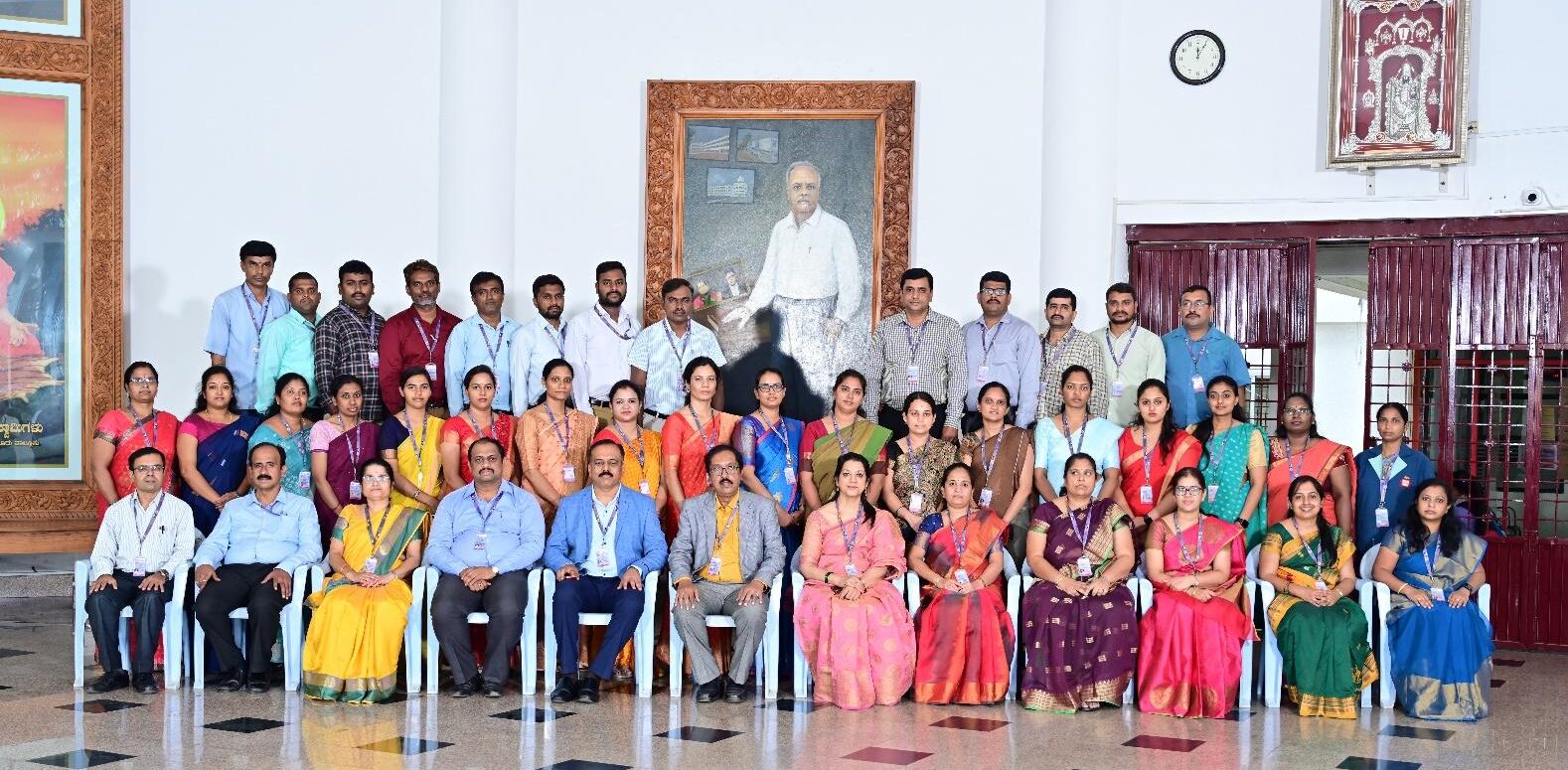
- Established in 2003 with an intake of 60 students and later the strength was increased to 120 in the year 2011 and then strength was increased to 180 in 2019.
- 32 professionally qualified faculty members with various research specializations.
- Five VTU ranks: four in PG and 1 in UG.
- The final year students are placed in reputed companies with the highest package of Rs. 20 Lakhs Per Annum.
- Accredited by National Board of Accreditation (NBA), New Delhi from 01.07.2017 to 30.06.2020, 01.07.2020 to 30.06.2023 and 01.07.2023 to 30.06.2026
- Established training placements and research labs such as Embedded Lab, IOT Lab, Intel Lab and Wireless Communication Lab with the latest technical tools for encouraging students and research scholars in updating their knowledge on the latest technology.
- Memorandum of Understanding (MoUs) has been formally signed between GSSSIETW, Mysuru with leading industries.
- Students are exposed to various professional activities like technical seminars, elective based mini projects, industrial visits and participation in inter collegiate workshops/conferences resulting in good publications
- To bridge the gap between industry and institute the students are given technical training on industry requirements for quality internship and placement.
- VTU recognized Research Centre is established which facilitates faculty members to pursue their PhD.
- Department has required infrastructure as per AICTE and VTU norms.
- News Letters of the Department.
Vision
Mission
M1: To impart value based Technical education and training.
M2: To impart Theoretical Knowledge, Practical Knowledge and Entrepreneurship Skills.
M3: Fostering culture of innovation and research for development of society.
M4: To sensitize the Students regarding Social, Moral and Professional ethics.
M5: To provide industry standard certifications on skills to enhance students knowledge make them prepared for placements.
Program Educational Objectives (PEOs) :
- PEO1: To inculcate students to excel in professional career and/or higher education by acquiring knowledge in the field of Electronics and Communication.
- PEO2:To make the students capable of managing their profession based on existing as well as new emerging technologies in the area of Electronics and Communication Engineering.
- PEO3: To Produce Technically competent graduates with ability to analyze, design, develop, optimize and implement Electronics and Communication systems.
- PEO4: To prepare the students to be able to exhibit professionalism, ethical attitude, communication skills, team work in their profession and to adapt to current trends by engaging in life-long learning.
Program Outcomes (PO’s) based on NBA graduate attributes :
Engineering Graduates will be able to:
- Engineering knowledge: Apply the knowledge of mathematics, science, engineering fundamentals, and an engineering specialization to the solution of complex engineering problems.
- Problem analysis: Identify, formulate, review research literature, and analyze complex engineering problems reaching substantiated conclusions using first principles of mathematics, natural sciences, and engineering sciences.
- Design/development of solutions: Design solutions for complex engineering problems and design system components or processes that meet the specified needs with appropriate consideration for the public health and safety, and the cultural, societal, and environmental considerations.
- Conduct investigations of complex problems: Use research-based knowledge and research methods including design of experiments, analysis and interpretation of data, and synthesis of the information to provide valid conclusions.
- Modern tool usage: Create, select, and apply appropriate techniques, resources, and modern engineering and IT tools including prediction and modeling to complex engineering activities with an understanding of the limitations.
- The engineer and society: Apply reasoning informed by the contextual knowledge to assess societal, health, safety, legal and cultural issues and the consequent responsibilities relevant to the professional engineering practice.
- Environment and sustainability: Understand the impact of the professional engineering solutions in societal and environmental contexts, and demonstrate the knowledge of, and need for sustainable development.
- Ethics: Apply ethical principles and commit to professional ethics and responsibilities and norms of the engineering practice.
- Individual and team work: Function effectively as an individual, and as a member or leader in diverse teams, and in multidisciplinary settings.
- Communication: Communicate effectively on complex engineering activities with the engineering community and with society at large, such as, being able to comprehend and write effective reports and design documentation, make effective presentations, and give and receive clear instructions.
- Project management and finance: Demonstrate knowledge and understanding of the engineering and management principles and apply these to one’s own work, as a member and leader in a team, to manage projects and in multidisciplinary environments.
- Life-long learning: Recognize the need for, and have the preparation and ability to engage in independent and life-long learning in the broadest context of technological change.
Program Specific Outcomes
- PSO1: Graduates will have the ability to mould the technology in the areas of Analog and Digital Scenario.
- PSO2: Implementation of functional Blocks of hardware software co-design for signal processing and communication application.
About the course :
The course consists of:
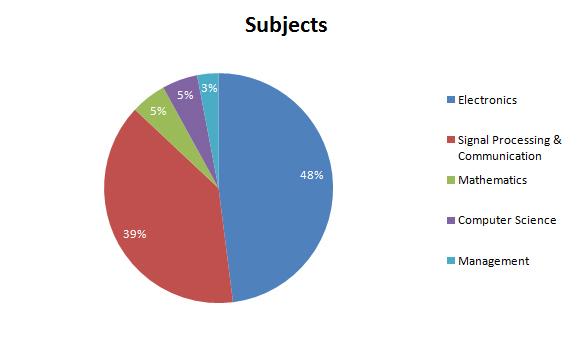
Electronics subjects like Fundamentals of CMOS VLSI Design, Fundamentals of HDL programming, Network Analysis, Field Theory, Analog Electronics circuits and etc. Signal Processing & Communication subjects like Signals and Systems, Digital Signal Processing, Speech Processing, Image Processing, Analog Communication, Digital communication and etc. Computer science subjects like operating systems, Programming in C++ and etc. Management subjects like Management and entrepreneurship and etc. Mathematics subjects like Mathematics III, Mathematics IV and etc.
Our Academic Partners