
Sustainable Development Goals
Initiatives and Implementation of Sustainable Development Goals (SDGs)
The institution has undertaken several initiatives aligned with the Sustainable Development Goals (SDGs), particularly in the areas of green energy adoption, waste management, water conservation, carbon footprint reduction, quality education, resource reuse and recycling, minimizing resource consumption, and promoting renewable energy sources. The details of these initiatives and their impact on sustainable development are presented below.
1. Sewage Water Treatment Plant (STPI 1- 15OKLD)
GSSSIETW is committed to the green campus philosophy and to saving the precious treasure of nature i.e. water. Following on this path, our initiative to reuse the wastewater in the campus is another feather in our cap. The Sewage Treatment Plant on the premises not only saves water but also helps to keep the campus healthy, clean and green. Sewage treatment is necessary to reduce the toxicity of sewage and maintain a safe and healthy environment. The STP consists of all process units which help to minimize the chemical and biological load of domestic sewage and can be reused for gardening and irrigation purpose.
The following is a step-by-step process of wastewater treatment.
1. Wastewater Collection
This is the first step in the wastewater treatment process. Collection systems are put in various blocks including academic, blocks, administrative blocks and hostel blocks, to ensure that all the wastewater is collected and directed to a central point.
2. Equalization Tank
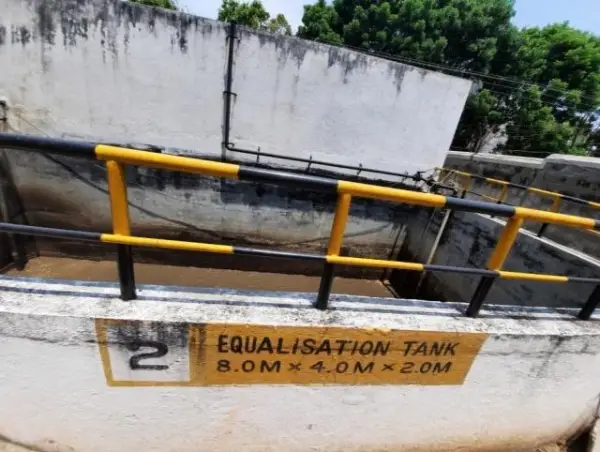
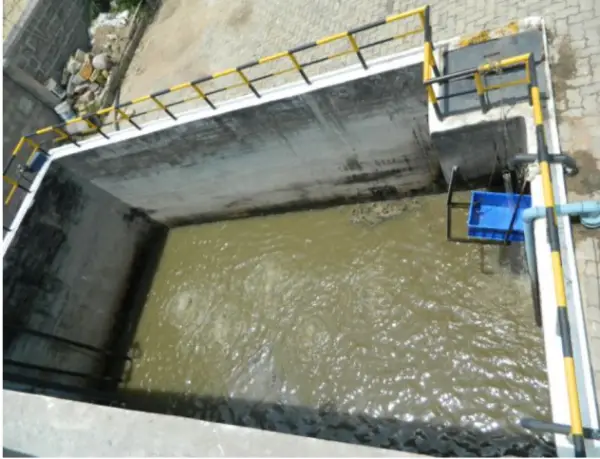
The main function of the equalization tank is to act as a buffer: to collect the raw incoming sewage that comes at widely fluctuating rates and pass it on to the rest of the sewage treatment plant at a steady flow rate. The tank is rectangular in shape of dimension 8.0m X 4.5m X 2.0m, to provide placement of air diffusers for full floor coverage. The diffusers are retrievable. Sets of diffusers may be lifted out and cleaned for routine maintenance.
3. Aeration Tank
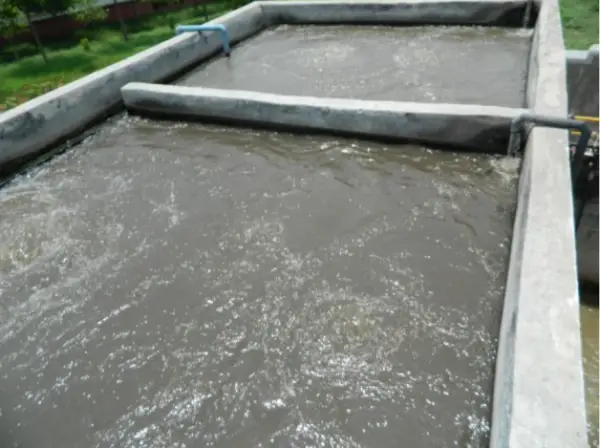
Wastewater aeration is the process of adding air into wastewater to allow aerobic bio-degradation of the pollutant components. It is an integral part of most biological wastewater treatment systems. Aeration in an activated sludge process which is based on pumping air into a tank, which promotes the microbial growth in the wastewater. The plant is equipped with two compartment aeration tank each having dimension of 8.0mX4.5mX3.5m. Submersible aerators are lowered into the wastewater and compressed air is released, creating bubbles. This method delivers the most oxygen available into the wastewater and ensures the wastewater and oxygen are thoroughly mixed.
4. Clarifier
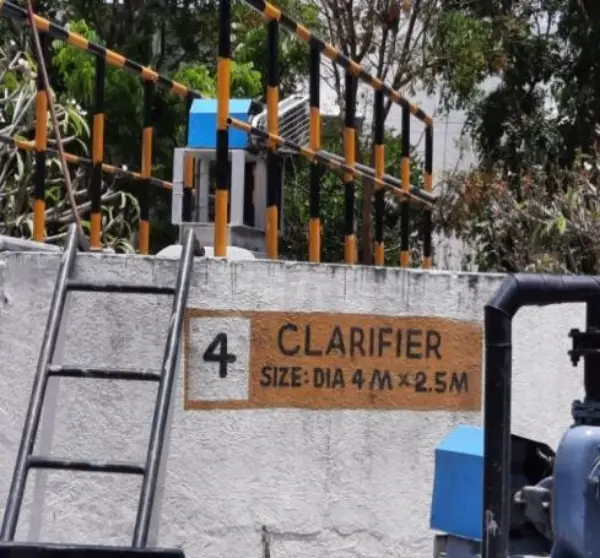
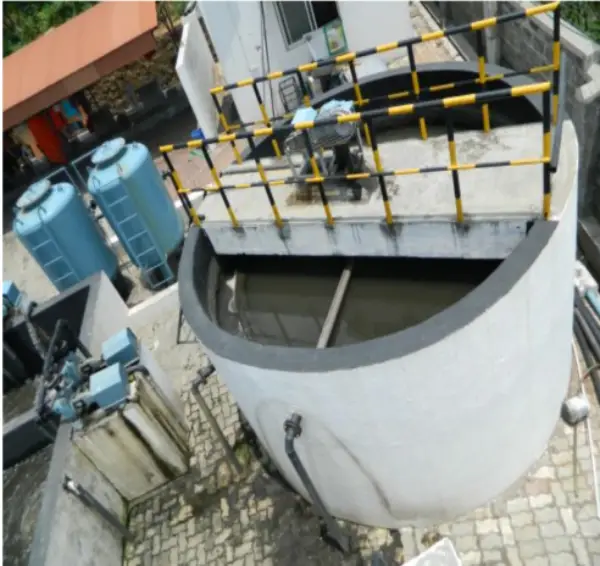
The process of sedimentation is the part of wastewater treatment where contaminants are settled down due to gravity and the clean liquid or clarified water is separated. The same principle of gravity settling is used by clarifiers in wastewater treatment to remove suspended solids or solid particulates from the liquid. The concentrated impurities are known as sludge whereas those that float to the surface of the liquid are called scum. The large settling tanks with in-built mechanical means like scraper blades act continuously to remove solids towards the pipe or place where sludge and scum collection takes place. The size of the clarifier tank which is circular in shape is 4m diameter X 2.5 m depth. The clear supernatant is then sent to the clarified water sump.
5. Clarified water sump
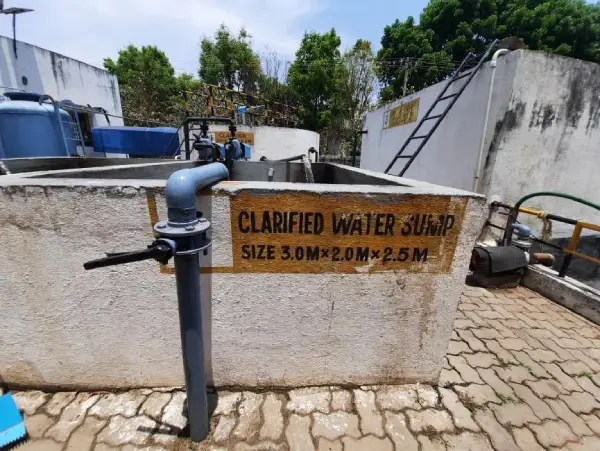
The clarified water is allowed stand for several hours without any agitation in this tank. A small amount of the biomass is re-circulated into the aeration tank for further oxidation of biologically oxidizable materials. This tank is rectangular in shape having dimensions of 3.0m X 2.0 m X 2.5m.
6. Pressure sand filter
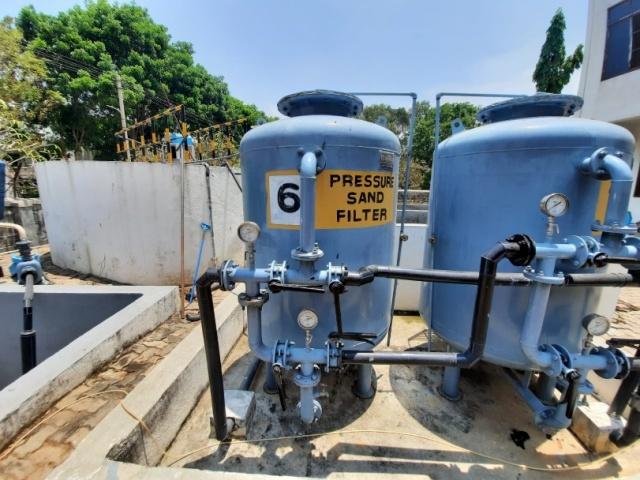
The Pressure Sand Filter consists of a multiple layer of sand with a variety in size and specific gravity. These Filters are designed to remove turbidity and suspended particles present in the feed water with minimum pressure drop. Raw water flows down wards through the filter bed and as the suspended matter, is retained on the sand surface and between the sand grains. There is steady rise in the loss of head over a period of time and the flow reduces once the pressure drop across the filter is excessive. The filter is then taken out of service and cleaning of the filter media is effected by flow reversal also called as backwash. Backwashing is carried out once in every 15 days by trained technicians. Water is then passed on to the filtration unit.
7. Activated carbon filter with Chlorination
Chlorination is done to kill disease-causing bacteria and control nuisance organisms such as iron-reducing bacteria, slime, and sulfate-reducing bacteria. Chlorine destroys target organisms by oxidizing the cellular material of bacteria. Liquid sodium hypochlorite is used in STP because they are less hazardous than chlorine gas.
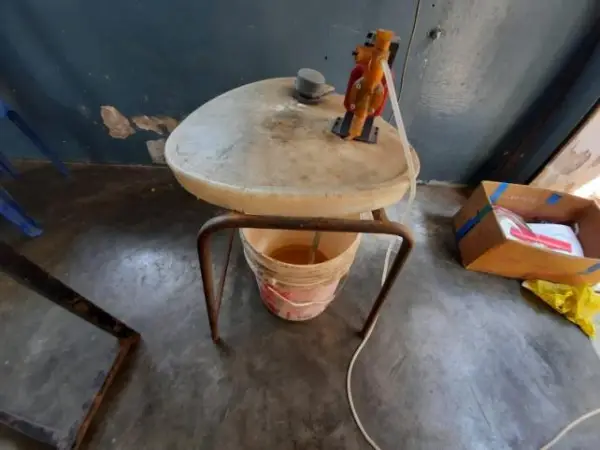
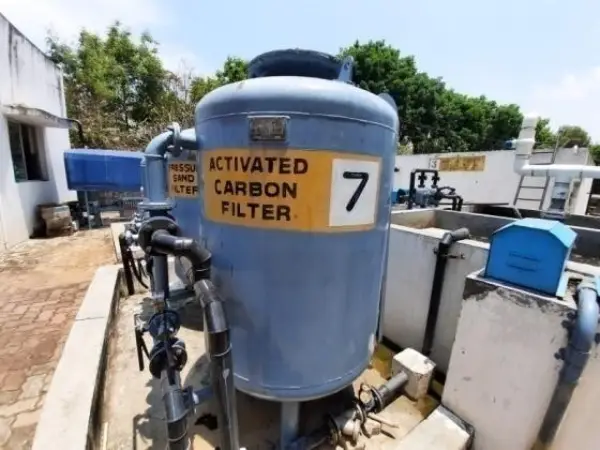
Chlorination unit and Activated carbon filter
Filtration process includes activated carbon to remove the residual contaminants from sewage waste. Carbon absorbs micropollutants such as chlorine, methane, organic compounds, and even the taste and odour from water.
Activated carbon filter removes excess chlorine from waste-water. It has a large surface area which makes it highly effective to absorb contaminants from waste-water. Chlorine removal process fills the wide pores of the carbon. Hence, impurities are removed. Activated carbon needs replacement is carried out regularly, as its capacity to work reduces gradually.
Chlorination is done to kill disease-causing bacteria and control nuisance organisms such as iron-reducing bacteria, slime, and sulfate-reducing bacteria. Chlorine destroys target organisms by oxidizing the cellular material of bacteria. Liquid sodium hypochlorite is used in STP because they are less hazardous than chlorine gas.
8. Treated water sump
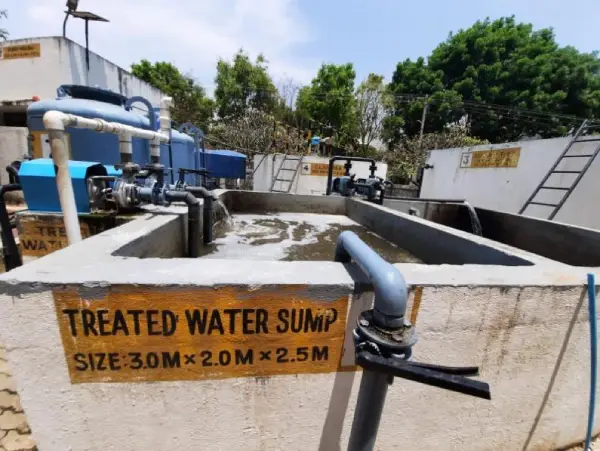
Treated Wastewater from various facilities of GSSSIETW is stored in the treated water sump which is rectangular in shape having dimensions of 3.0m X 2.0m X 2.5m. Treated water is reused within the campus for gardening and irrigation purposes. The treated wastewater is monitored and analysed for all critical parameters twice a year, in January and June.
2. Sewage Water Treatment Plant 2 (Bio Swirl Method – 1OOKLD)
With biofilm, the disadvantages of activated sludge are negated. In fact, a reduction in the gradient of organics by introducing beyond one day’s collection facility offers some remarkable advantages. The ultimate objective is the same to apply massive active. We have achieved it in the collection facility. This actually eliminates the need to design any our solution utilizes the power of biomass to perform consistently a high quality of treatment to fulfill your unique needs and application. The treatment gives at one shot practically maintenance free plants designed for absolute ease of operation, flexibility in throughput and sustainable saving on capital and operating expenditure.The active biomass applied in the process does not alter the chemistry of water but purifies it. Biofilm treatment technology differs considerably from activated sludge process although the objective is the same to eliminate contamination in wastewater. One method, a technique that uses microorganisms effectively, reduces sludge production and eliminates human interference in biological treatment. It is necessary to ensure high degree of purification by microorganisms to permit reuse or release of treated water into water bodies.
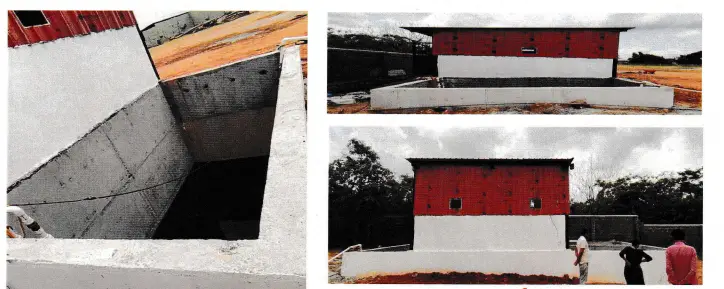
Fig 8: Sewage Water Treatment Plant 2 (Bio Swirl Method – 1OOKLD)
3. Green Campus Management
Green campus audit includes the plants, greenery and sustainability of the campus to ensure that the buildings conform to green standards. The college has ample land surface for greening initiatives. GSSSIETW has been built over a huge campus area of 45,405.73 Sq-mt (1 1 acres), out of which 35549.73 Sq-mt is open space summing up to 78% of the total. Open Space – 35549.73 Sq-mt o 21330 Sq-mt is Extensive Landscaped areas. Balance is play fields and circulation areas. The campus has 80 different species of trees which are named scientifically using placards. The campus green team has listed the name and number of all the different species present in the campus and periodically reviews and updates the 1ist. The plantation includes various types of indigenous species of ornamental and medicinal plant species. The biodegradable waste generated by the campus is collected on a daily basis to keep the campus clean. The waste is then decomposed in a compost pit and reused as manure.
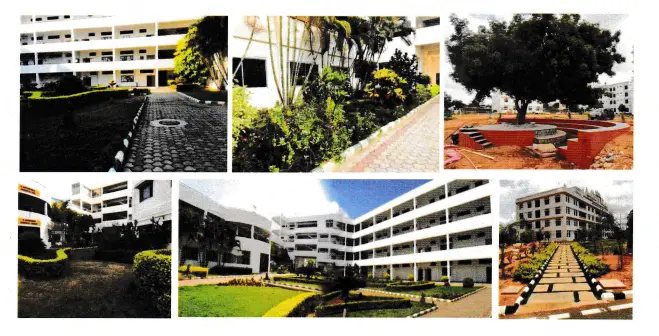
Fig 9: Green Campus
4. Waste Management System at the Institute:
Organic Waste Management: For disposal of Organic Waste, the College has adopted the route of Composting, wherein the waste is collected in a pit and after the composting the same is used as fertilizer. The upkeep of garden is entrusted to appointed party who is responsible for its disposal. The waste generated from the hostel and other organic waste from the garden and open spaces are collected and decomposed in a compost pit and then used as manure.
Paper Waste Management: The waste paper generated can be classified into 2 types. One, the day to day printouts. They are recycled by utlhzing the un-used side of it as one-sided papers. Two, long time archival such as records and examination papers. They are archived for a long term and then given out for recyclers at its residual value.
Construction Waste: The college is undergoing continuous construction and renovations. Construction waste is generated. The college is effectively util2ing this waste as filling for new construction activities etc.
E-Waste management: The institute has constituted a E-waste management committee with rules of e-waste management on 11 .O2.2O 19. The committee has circulated a circular on 22.02.2019 for the identification, segregation, labeling and storage of ewaste generated in each department and general amenities. On 28.02.2019, the committee has inspected the accumulated e-waste at various departments and amenities for final disposal.
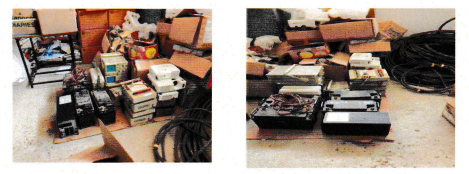
Fig 10: Waste Management System
5. Plasma Agriculture laboratory
Agricultural productivity is critical to meet the increasing global food demands. One of the challenges in crop production is enhancing seed germination rates and improving seedling vigor. Seed treatment using physical methods has garnered interest due to its potential to improve germination performance without the use of chemicals. One such emerging technique is the use of electrical discharge plasma (EDP). Plasma treatment exposes seeds to reactive species such as ions, free radicals, and UV radiation, which are hypothesized to induce beneficial modifications to the seed coat, improving water absorption and possibly breaking dormancy.
Lab objectives:
- To assess the impact of electrical discharge plasma on seed germination rates.
- To investigate changes in seed physiology post-treatment, including water absorption, enzymatic activities, and cellular changes.
- To evaluate the effects of plasma treatment on seedling growth parameters, such as root and shoot length, biomass, and chlorophyll content.
- To optimize plasma treatment conditions (e.g., exposure time, plasma power) for maximum germination efficiency.
6. Energy Conservation
Energy auditing deals with the conservation and methods to reduce its consumption related to environmental degradation.
1.Solar Passive Architecture
The building is designed to make best use of day light and avoid the heat in-grace. Blinds are available to control unnecessary heat in-grace. In addition it is confirmed that there is no unnecessary operation of the equipments which add up the heat.
2.Solar Power
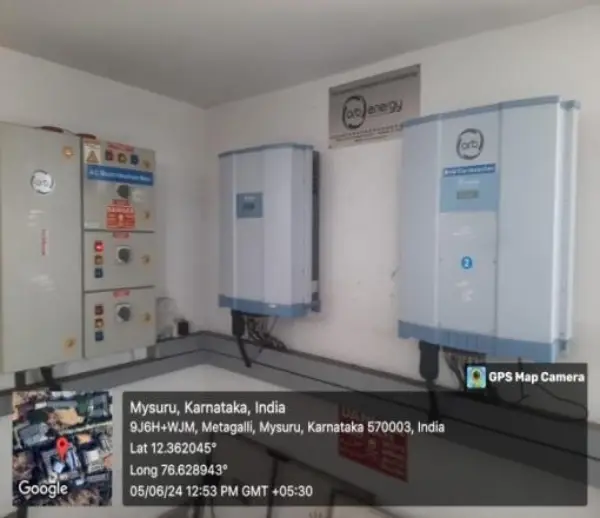
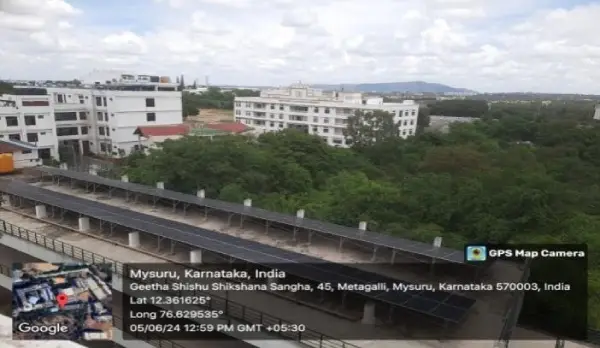
Solar power is one of the solutions to overcome the energy discrepancy in the world. This is one of the renewable energy sources, and the generation of solar power does not have any adverse effect on the environment.As a part of its ‘Green Campus’ initiative, GSSSIETW has set up a 100KWp+ 100KWp = 200KWp Roof Top Solar PV Power Plants on its academic buildings which is spread over an area of 30,000 sq-ft. Each 100KWp plant consists of smaller arrays each having 12“6 cells. The Solar Power Plant, with unique design, consists of 4 number of 50KW Grid Connected Inverters. Street light in the college campus will also be supplied from the same rooftop power. With the solar potential of 325W peak sun hours per day for each panel, the PV power system efficiency of 78%. The estimated plant capacity factory is 17% more than 50% of electricity demands of the institution will be met by this solar roof top plant.
c. Solar street lights
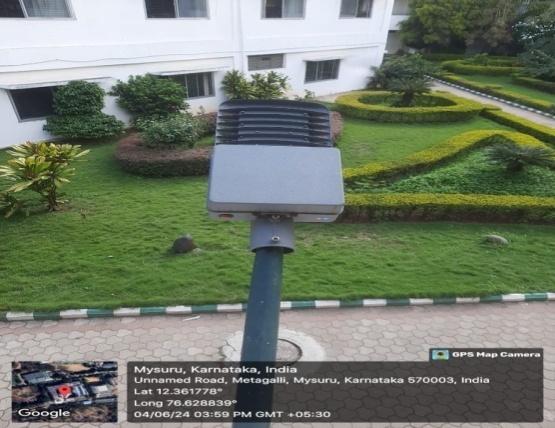
GSSS Campus has installed 27 Solar street lights which are powered by photovoltaic panels that are mounted on the lighting structure. The photovoltaic panels have chargeable battery, which powers fluorescent lamps of 11 watts each during the night.
7. Regal Volta: - For sustainable development
- Students from GSSS Institute of Engineering & Technology for Women (GSSSIETW) Mysuru designed & developed golf structured Electric Vehicle (EV) with name of “Regal Volta” . Regal Volta is a four wheeler electric vehicle can carry up to 600kg of weight with range of 60-80kms in single charge with a cost of 10 paise per kilometer. It is driven by 1KW BLDC, smart controller with front back controller powered by Lithium ion battery. The operation of this Regal Volta is noiseless with zero emissions, eco-friendly, low-cost vehicle with easy parking and having leg brakes with minimum luggage carrying capacity and it is easy to ride. The vehicle will be utilized by the visitors, Experts, Management committee members, faculties students and hostel members.
- The design of the REGAL VOLTA Electric Vehicle (EV) has been approved by the Indian Patent Design Authority (Design No: 444602-001, Granted on 17/01/2025), marking another milestone in its development.
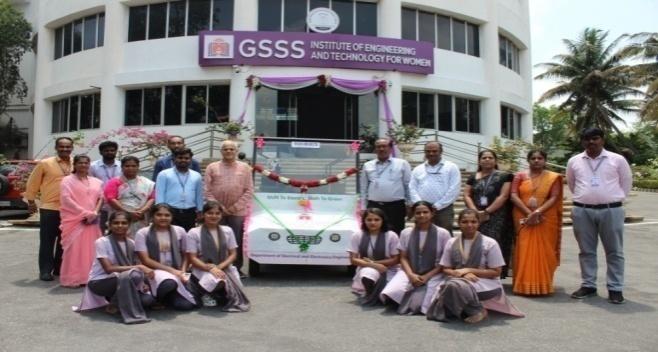
Fig 14: REGAL VOLTA Electric Vehicle (EV)
Table 1: Summary of the SDG Mapping of Institution Initiatives
| Institution Initiatives | Mapping of SDG Goals | Target Indicators | Justification |
| Sewage Water Treatment Plant 1 (STP 1 – 150 KLD) | SDG 6: Clean Water and Sanitation | 6.3 – Improve water quality by reducing pollution | Treats wastewater and enables reuse, reducing contamination of natural water bodies and conserving freshwater resources. |
| Sewage Water Treatment Plant 2 (Bio Swirl Method – 100 KLD) | SDG 6: Clean Water and Sanitation | 6.3 – Improve water quality | Uses advanced bio-treatment technology to recycle wastewater efficiently, minimizing environmental pollution and promoting sustainable water management. |
| Green Campus Management | SDG 13: Climate Action, | 13.3 – Improve education and awareness; | Promotes eco-friendly practices like tree plantation, biodiversity conservation, and reduced carbon footprint within the campus. |
| SDG 15: Life on Land | 15.1 – Sustainable ecosystems | ||
| Waste Management System | SDG 12: Responsible Consumption and Production | 12.5 – Substantially reduce waste generation | Encourages segregation, recycling, and proper disposal of waste, reducing landfill burden and promoting circular economy practices. |
| Plasma Agriculture Laboratory | SDG 2: Zero Hunger, SDG 9: Industry, Innovation and Infrastructure | 2.4 – Sustainable food production; 9.5 – Enhance scientific research | Supports innovative agricultural practices that improve crop yield and sustainability using plasma technology. |
| Energy Conservation | SDG 7: Affordable and Clean Energy | 7.3 – Improve energy efficiency | Implements energy-saving measures and efficient systems to reduce overall energy consumption and carbon emissions. |
| Solar Power Generation | SDG 7: Affordable and Clean Energy, | 7.2 – Increase share of renewable energy; | Generates clean, renewable energy on campus, reducing dependence on fossil fuels, lowering electricity costs, and minimizing carbon emissions. |
| SDG 13: Climate Action | 13.2 – Integrate climate measures | ||
| Solar Street Lights | SDG 7: Affordable and Clean Energy, Communities | 7.1 – Universal access to clean energy; | Provides energy-efficient outdoor lighting using solar energy, ensuring safety and reducing electricity consumption and environmental impact. |
| SDG 11: Sustainable Cities and | 11.7 – Safe and inclusive public spaces | ||
| Regal Volta – For Sustainable Development | SDG 7: Affordable and Clean Energy, | 7.2 – Increase renewable energy share; | Promotes renewable energy solutions and sustainability-driven innovations within the institution. |
| SDG 13: Climate Action | 13.2 – Climate measures integration |
Social Connect & Responsibility (SCR)
As part of the Social Connect & Responsibility (SCR) initiative under VTU 3rd semester, students actively engaged in five socially relevant activities: tree plantation and adoption, heritage walks with crafts promotion, organic farming and waste management, water conservation, and food walks. These activities collectively contributed to multiple Sustainable Development Goals (SDGs). Plantation efforts supported climate action and biodiversity conservation (SDG 13 and SDG 15), while heritage and crafts initiatives promoted sustainable communities and local livelihoods (SDG 11 and SDG 8). Organic farming and waste management encouraged responsible consumption, sustainable agriculture, and environmental protection (SDG 12, SDG 2, and SDG 13). Water conservation activities emphasized efficient resource management (SDG 6 and SDG 13), and food walks created awareness about local food systems and sustainable consumption practices (SDG 2, SDG 11, and SDG 12). Together, these initiatives fostered environmental responsibility, cultural awareness, and community engagement among students.
Table 2: Summary of the SDG Mapping of Social Connect Activities
| Activity Conducted | Mapping of SDG Goals | Target Indicators | Justification |
| Tree Plantation and Adoption | SDG 13:Climate Action | 13.3 – Climate awareness | Enhances green cover, promotes biodiversity, and creates awareness on environmental protection and climate change mitigation. |
| SDG 15: Life on Land | 15.1 – Ecosystem conservation | ||
| Heritage Walks with Crafts Promotion | SDG 11: Sustainable Cities and Communities, | 11.4 – Protect cultural heritage | Encourages preservation of cultural heritage and promotes traditional crafts, supporting local artisans and livelihoods. |
| SDG 8: Decent Work and Economic Growth | 8.3 – Support local economy | ||
| Organic Farming and Waste Management | SDG 12: Responsible Consumption and Production, | 12.5 – Reduce waste; | 12.5 – Reduce waste; |
| SDG 2: Zero Hunger, | 2.4 – Sustainable agriculture; | ||
| SDG 13: Climate Action | 3.2 – Climate action | ||
| Water Conservation | SDG 6: Clean Water and Sanitation, | 6.4 – Efficient water use; | Encourages responsible water usage, conservation techniques, and awareness about water resource management. |
| SDG 13: Climate Action | 13.3 – Climate awareness | ||
| Food Walks | SDG 2: Zero Hunger, | 2.1 – Food access; | Raises awareness about local food systems, sustainable consumption, and minimizing food wastage. |
| SDG 11: Sustainable Cities and Communities, | 11.3 – Sustainable communities; | ||
| SDG 12: Responsible Consumption and Production | 12.3 – Reduce food waste |
National Service Scheme (NSS)
National Service Scheme provides the students an opportunity to understand the community; identify its needs and problems as well as the solutions in which they can be involved by assuming social and civic responsibilities. NSS also provides students with the opportunity to apply their education in finding practical solutions to the problems faced by the individuals and the community at large. NSS aims at arousing social consciousness of the youth with an overall objective of personality development through community service. NSS enables students to participate in various programmes of social service and national development, and to help the community.
Table 3: Summary of the SDG Mapping of NSS Unit Activities
| Event Name | Mapping of SDG Goals | Target | Justification |
| Youth Climate Innovator’s Challenge (YCIC) | SDG 13: Climate Action, | 13.3 – Climate awareness; | Encourages innovative solutions for climate challenges and promotes sustainability-driven thinking among youth. |
| SDG 9: Industry, Innovation and Infrastructure | 9.5 – Research & innovation | ||
| Safe Mysuru Marathon – 2026 | SDG 3: Good Health and Well-being, | 3.4 – Promote health; | Promotes physical fitness, public safety awareness, and community participation. |
| SDG 11: Sustainable Cities and Communities | 11.7 – Safe public spaces | ||
| Fit Mysuru Walkathon | SDG 3: Good Health and Well-being | 3.4 – Improve physical health | Encourages healthy lifestyles and community wellness through physical activity. |
| National Education Day Celebration | SDG 4: Quality Education | 4.7 – Education for sustainable development | Promotes awareness on education, literacy, and the importance of inclusive learning. |
| Candle Light March – World Hospice & Palliative Care Day 2025 | SDG 3: Good Health and Well-being | 3.8 – Access to healthcare | Raises awareness about palliative care, compassion, and support for patients with serious illnesses. |
| “Parisara Jagruthi – Environmental Awareness Program” (KSPCB) | SDG 13: Climate Action, | 13.3 – Awareness; | Promotes environmental awareness, pollution control, and sustainable practices. |
| SDG 15: Life on Land | 15.1 – Ecosystem protection | ||
| “Hejje – A Step Towards a Better Tomorrow” CSR Initiative (All Phases) | SDG 4: Quality Education, | 4.1 – Access to education; | Supports school education, improves learning infrastructure, and promotes inclusive development across communities. |
| SDG 10: Reduced Inequalities | 10.2 – Social inclusion | ||
| NSS Volunteer Service at Mysore Zoo during Dasara – 2025 | SDG 15: Life on Land, | 15.5 – Protect biodiversity; | Assists in wildlife awareness, visitor management, and promotes conservation education. |
| SDG 11: Sustainable Cities and Communities | 11.7 – Public engagement | ||
| ABVP Awareness Rally Against Drugs – “Mysuru Chalo” | SDG 3: Good Health and Well-being, | 3.5 – Prevent substance abuse; | Raises awareness about drug abuse prevention and promotes a safe and healthy society. |
| SDG 16: Peace, Justice and Strong Institutions | 16.1 – Safe communities | ||
| Social Initiative by Miss South India 2025 – Strengthening NICU in Government Hospitals | SDG 3: Good Health and Well-being | 3.2 – Reduce neonatal mortality | Supports improvement of neonatal healthcare facilities and promotes maternal and child health. |
Our Academic Partners