
Vision
“To be recognized as a premier department for empowerment of women in the field of electrical and electronics engineering by imparting quality technical education committed with social and ethical values”
Mission
M1: To provide excellent academic ambience that combines rigorous academic study and the excitement of innovation to excel in the field of electrical and electronics engineering.
M2: To enhance learning through practice of modern tools and cutting edge technologies in Electrical and Electronics engineering with multidisciplinary approach to meet industry requirements.
M3: To carryout research and innovative developmental activities in frontier areas which serves the requirement of industry & society.
- PEO1: Graduates will be able to exhibit their technical skills in electrical engineering and allied area.
- PEO2: Graduates will be able to pursue post graduate studies and research in their respective domain.
- PEO3: Graduates will be capable of exhibiting leadership & entrepreneurship skills in diversified engineering fields.
PO1: Engineering Knowledge: Apply knowledge of mathematics, natural science, computing, engineering fundamentals and an engineering specialization as specified in WK1 to WK4 respectively to develop to the solution of complex engineering problems.
PO2: Problem Analysis: Identify, formulate, review research literature and analyze complex engineering problems reaching substantiated conclusions with consideration for sustainable development. (WK1 to WK4).
PO3: Design/Development of Solutions: Design creative solutions for complex engineering problems and design/develop systems/components/processes to meet identified needs with consideration for the public health and safety, whole-life cost, net zero carbon, culture, society and environment as required. (WK5).
PO4: Conduct Investigations of Complex Problems: Conduct investigations of complex engineering problems using research-based knowledge including design of experiments, modelling, analysis & interpretation of data to provide valid conclusions. (WK8).
PO5: Engineering Tool Usage: Create, select and apply appropriate techniques, resources and modern engineering & IT tools, including prediction and modelling recognizing their limitations to solve complex engineering problems. (WK2 and WK6).
PO6: The Engineer and The World: Analyze and evaluate societal and environmental aspects while solving complex engineering problems for its impact on sustainability with reference to economy, health, safety, legal framework, culture and environment. (WK1, WK5 and WK7).
PO7: Ethics: Apply ethical principles and commit to professional ethics, human values, diversity and inclusion; adhere to national & international laws. (WK9)
PO8: Individual and Collaborative Team work: Function effectively as an individual, and as a member or leader in diverse/multi-disciplinary teams.
PO9: Communication: Communicate effectively and inclusively within the engineering community and society at large, such as being able to comprehend and write effective reports and design documentation, make effective presentations considering cultural, language, and learning differences
PO10: Project Management and Finance: Apply knowledge and understanding of engineering management principles and economic decision-making and apply these to one’s own work, as a member and leader in a team, and to manage projects and in multidisciplinary environments.
PO11: Life-Long Learning: Recognize the need for, and have the preparation and ability for i) independent and life-long learning ii) adaptability to new and emerging technologies and iii) critical thinking in the broadest context of technological change. (WK8).
PSO1: To develop competency in the application of modern engineering tools and digital technologies for monitoring, control, protection, optimization of industry-oriented problem solving skills in area of Electrical & Electronics systems.
PSO2: To equip with practical knowledge in renewable energy systems, smart grid technologies, energy management, and power sector regulations for providing sustainable and AI enabled efficient engineering solutions.
PSO3: To possess the capacity to serve as research fellows and entrepreneurs to apply their expertise related to Electrical and Electronics systems.
A Sustainable Development Goals (SDG) Cell guides organizations to implement the United Nations’s 17 global goals. Typical guidelines mandate the adoption of specific SDGs, the execution of regular educational/action-based activities, and transparent reporting to comply with sustainability rankings.
A typical SDG Cell Committee structure and its standard operational norms are outlined below:
1.Committee Structure & Roles
- Coordinator / Chairperson: Heads the cell, oversees the implementation of institutional sustainability plans, and coordinates with external regulatory or UN bodies.
- Departmental Coordinators / Faculty Representatives: Act as liaisons between the main committee and individual departments. They ensure grassroots implementation of SDG targets.
- Student/Member Representatives: Assist in driving awareness campaigns, executing campus-wide green initiatives, and volunteering.
- Advisory Board (External): Industry experts or local government officials who periodically review progress and ensure policy alignment.
2. Mandatory Norms & Guidelines
- Goal Adoption: Departments or divisions adopt a minimum number of SDGs (usually 2 to 4) that directly align with their operations or curriculum.
- Activity Calendar: The cell ensures a minimum number of events (e.g., 2 to 3 workshops, seminars, or webinars per semester) are conducted focusing on social, economic, or environmental sustainability.
- Curriculum Integration: Institutionensures the integration of sustainability and the 17 SDGs into existing course syllabi and promotes SDG-focused research projects.
- Campus Operations: The committee ensures the enforcement of the “Refuse, Reduce, Reuse, Recycle” principle, eliminating single-use plastics, segregating waste at the source, and conserving water and energy.
3. Reporting & Accreditation
- Action Plans:The committee must outline measurable targets and an action plan at the beginning of each academic or financial year.
- Impact Tracking:Cells track specific indicators aligned with global benchmarks (e.g., using ISO guidelines to map operational impact).
- Compliance & Accreditation:The cell maintains rigorous documentation of all organized events and initiatives. This data is critical for accreditation submissions like NBA, NAAC or NIRF.
4. Composition of SDG Cell
| Sl.No | Name | Designation | Role in SDG Cell |
| 1 | Dr. M SHIVAKUMAR | Principal | Chair Person |
| 2 | Mrs. SYEDA NAUSHEEN FATHIMA | Dept of Civil Engg | SDG Coordinator |
| 3 | Dr. LATHA M Mrs. LALITHA K | Dept. of ECE | NBA Coordinators |
| 4 | Dr. SHESHADRI S N | Dept of Chemistry | NSS Officer |
| 5 | Dr. G.SREERAMULU MAHESH | Dept of EEE | Internal Members |
| Dr. MANJUPRASAD B | Dept of CSE(AI&ML) | ||
| Dr. BELLAPPA S | Dept of Chemistry | ||
| Dr. JAGADISHA N | Dept of EEE | ||
| 6 | E VEDHA SHREE (2nd SEMESTER) | CSE | Student Members |
| LOGITHA G (6th SEMESTER) | CSE | ||
| DEEPIKA SHREE K R (4th SEMESTER) | ECE | ||
| SARANYA G (6th SEMESTER) | ISE | ||
| INDUSHREE (4th SEMESTER) | EEE | ||
| AYESHA TAHREEM (4th SEMESTER) | CSE (AI&ML) | ||
| LAKSHA RAI (4th SEMESTER) | AI&DS | ||
| RACHITHA (2nd SEMESTER) | MBA |
5. Roles and Responsibilities
- Plan and implement SDG related activities.
- Maintain documentation and evidence of SDG initiatives.
- Conduct Awareness drives and sustainability campaigns.
- Collaborate with industries, NGO and community organizations.
- Submit Annual SDG Progress reports to IQAC.
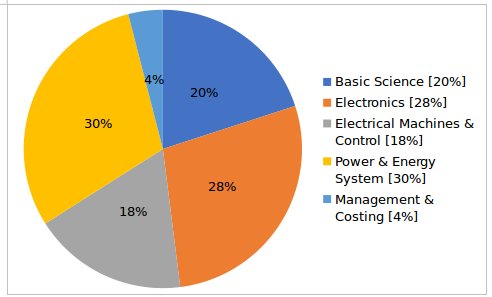
The course consists of:
The following Pie Chart shows the distribution of course content, representing blending of subjects of different skill area for UG and PG Course.